The Weirdest Tech Patents Ever Filed
Luna Giles
September 11, 2026
Patent databases are strange places.
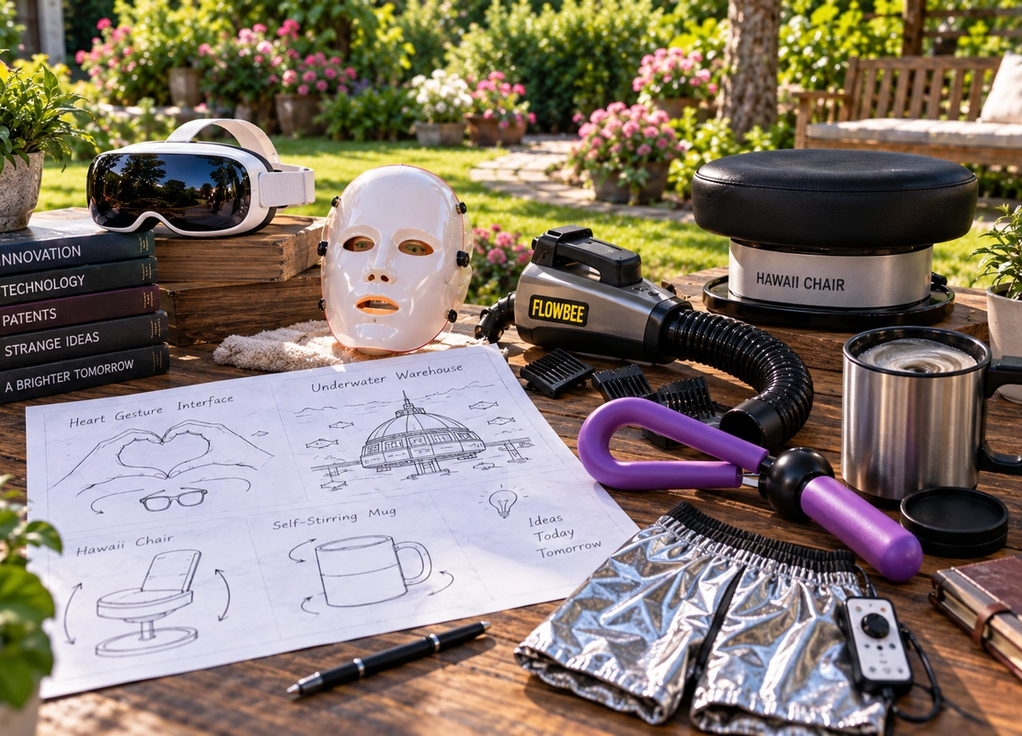
Alongside inventions that eventually become ordinary parts of everyday technology, you can find ideas that sound as though someone came up with them during an unusually creative lunch break. There are systems involving underwater warehouses, wearable devices controlled with heart-shaped hand gestures and countless highly specific solutions to problems most people have never considered.
The important thing to understand is that a patent does not necessarily mean a product was ever built, sold or even seriously planned for release. Companies often patent ideas to protect possible future inventions, secure intellectual property or explore concepts that may never leave the drawing board.
That makes patent archives a fascinating glimpse into the technology industry’s imagination. They show not only what companies built, but what engineers and inventors thought might someday be worth building.
Google patented a heart-shaped hand gesture
Imagine wearing smart glasses, looking at something you like and making a heart shape with your hands.
Your glasses recognize the gesture, capture the object inside the heart and interpret the gesture as a sign that you “like” what you are looking at.
That sounds like a feature invented for a science-fiction parody, but Google was granted a U.S. patent describing essentially that idea.
The patent concerned hand gestures used with wearable head-mounted displays. One example involved creating a symbolic heart with two hands. A camera could recognize the gesture, identify the area framed by the hands, generate an image and perform an associated action.
One possible action described in the patent was communicating that the user “likes” the selected image or object to a social networking service.
Other gestures were described too, including using fingers to define areas within the wearer’s field of view.
The concept makes more sense when placed in the context of wearable computing. If people eventually use glasses instead of phones for certain digital interactions, designers need ways for them to control interfaces without constantly touching a screen.
Still, the mental image is wonderful: making a heart with your hands could effectively become a physical Like button.
Amazon imagined storing products underwater
Warehouses normally have one fairly obvious requirement: dry land.
Amazon Technologies patented a concept that challenged that assumption.
The company’s patent for “aquatic storage facilities” described systems where inventory could be stored in a body of liquid and later retrieved when required.
The concept involved containers with mechanisms that could control their buoyancy. Items could remain stored at different positions within an aquatic environment and then be directed toward the surface for retrieval.
Why would anyone want an underwater warehouse?
Traditional fulfillment centers require enormous physical structures and complicated systems for moving products between storage locations and workers. An aquatic system could theoretically use buoyancy as part of the process of organizing and retrieving inventory.
That does not mean Amazon replaced its fulfillment centers with enormous swimming pools full of packages.
The patent is more interesting as an example of how companies explore logistics problems from unusual angles.
Sometimes innovation begins by questioning something everyone else assumes is fixed.
In this case, the assumption was apparently that warehouses should not contain lakes.
Some patents exist because interfaces keep changing
Many unusual technology patents make more sense when you realize that companies are constantly trying to predict how humans will interact with computers next.
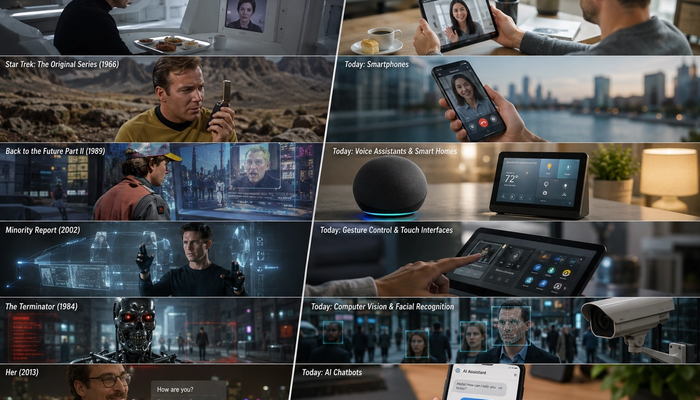
The keyboard and mouse dominated personal computing for decades. Smartphones made tapping, swiping and pinching ordinary. Voice assistants introduced spoken commands, while virtual and augmented reality systems created renewed interest in gestures and eye tracking.
Every new interface creates hundreds of smaller questions.
How does the device know what you want to select? How do you move an object without touching a screen? How does a wearable computer distinguish an intentional gesture from ordinary movement?
This is why patent descriptions can become wonderfully specific.
An idea that sounds absurd when summarized as “patenting a hand gesture” may actually represent an attempt to solve a genuine interface problem.
The weirdness often comes from seeing an experimental solution without the future product that would make it feel normal.
Companies patent futures that may never happen
One common misunderstanding is that a patent reveals a company’s product roadmap.
It usually does not.
Large technology companies employ researchers and engineers who explore enormous numbers of possibilities. When something appears potentially useful or commercially important, the company may seek patent protection even if nobody has decided to turn it into a product.
That creates a strange archive of alternate technological futures.
Some patented concepts eventually appear in recognizable products. Others influence later ideas without being implemented exactly as described. Many simply remain documents in patent databases.
This is partly because technology changes faster than the patent process.
An idea that looks promising during development may become unnecessary because another technology solves the same problem more elegantly.
Business priorities can change too.
A company might abandon an entire product category while patents connected to it remain publicly searchable for years.
Patent language makes ordinary ideas sound bizarre
There is another reason patent databases can be entertaining: patents are written very differently from product advertisements.
A company might advertise a feature as “tap to share.”
The corresponding patent could describe processors, communication interfaces, input signals, data structures and multiple alternative embodiments across dozens of pages.
Even familiar technology can sound alien when described with enough legal and technical precision.
Imagine explaining headphones without calling them headphones.
You might end up describing a system involving audio transducers positioned near the auditory organs of a user and electronically coupled to a portable computing device.
Technically correct.
Slightly terrifying.
This is partly because patents need to describe inventions precisely enough to establish what is being claimed while often covering multiple possible implementations.
The result is a style of writing capable of making even a button sound like experimental spacecraft technology.
Weird patents can reveal serious engineering problems
It is tempting to look at unusual patents and assume engineers were simply being ridiculous.
Often, the opposite is true.
The strangest ideas can emerge because conventional solutions have reached limitations.
Warehouse automation becomes complicated when companies need to move millions of products efficiently. Wearable computing becomes difficult when users no longer have a touchscreen directly in front of them. Autonomous systems create new problems involving navigation, identification and communication.
Engineers explore unconventional solutions because the problem itself is unconventional.
Most of those solutions will never become products.
That is exactly how experimentation works.
If every idea sounds completely sensible when first proposed, researchers are probably not exploring very far beyond what already exists.
A patent does not mean someone owns an entire idea
Patent headlines can also be misleading.
You might read that a company “patented gestures” or “patented underwater warehouses,” but patents generally contain specific claims defining the legal scope of the invention.
That distinction matters.
A company receiving a patent involving a particular gesture does not automatically mean nobody else can ever use that gesture in technology.
The actual question is whether another implementation falls within valid patent claims, which can become a complicated legal issue.
Patent documents also contain extensive descriptions of possible versions of an invention, and not everything described necessarily has the same legal significance.
The funny headline is usually much simpler than the underlying patent.
Today’s ridiculous patent could be tomorrow’s normal feature
Perhaps the most interesting thing about strange technology patents is how difficult it is to know which ideas will age badly.
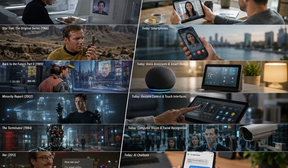
Touchscreens once looked futuristic.
Talking to computers looked ridiculous.
Wearing a computer on your wrist sounded unnecessary to many people until smartwatches became ordinary consumer products.
Technologies often seem strange because the surrounding ecosystem does not exist yet.
A gesture-based interface becomes more logical if people regularly wear augmented-reality glasses. Unusual warehouse systems become more interesting when online retailers are trying to automate increasingly enormous logistics networks.
Most bizarre patents will probably remain bizarre.
A few may simply be early.
That is what makes searching through old technology patents so entertaining. You are looking at thousands of possible futures, including the ones that never happened.
Some are brilliant.
Some are impractical.
And some make you wonder what problem could possibly have led someone to write the patent application in the first place.