The Real Story of How Games Get Made
Alena Marks
September 1, 2026
Playing a finished video game can make the experience seem almost impossibly complete. The characters move naturally, music responds to dramatic moments, environments stretch into the distance and pressing a button produces an immediate reaction. Everything appears to belong together.
Getting to that point is much messier.
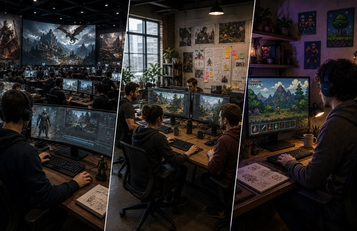
Games are built through thousands of decisions made by designers, programmers, artists, writers, animators, audio specialists, testers and producers. A major game can take several years and involve hundreds of people, while a small independent title might be created by only a handful of developers who each perform several different jobs.
In both cases, making a game is rarely a straightforward journey from a brilliant idea to a polished release. Features are tested and removed, stories change, technical problems appear unexpectedly and ideas that sound fantastic in a meeting sometimes turn out to be terrible once someone actually tries to play them.
Most games begin much smaller than they end
A game often starts with a relatively simple idea. The team might have a concept for a particular combat system, setting, story or type of player experience. At this stage, developers are trying to answer a basic question: is there actually a good game here?
They may create prototypes that look nothing like the final product. Characters can be represented by basic shapes, environments may be almost empty and animations might barely exist. The goal is not to make something beautiful. It is to test whether the fundamental interaction is enjoyable.
A game about swinging between buildings, for example, needs to make movement feel good before developers spend years creating a detailed city around it. If the central mechanic is not satisfying in a rough prototype, expensive graphics are unlikely to fix the problem.
This early experimentation can prevent teams from spending enormous amounts of time building the wrong game.
Game design is about creating rules
Game designers help determine what the player can do and how the game responds.
They might design combat systems, puzzles, character abilities, progression, difficulty or the economy that determines how players earn and spend resources. Level designers focus on spaces and encounters, deciding where the player goes and what happens along the way.
These decisions are deeply interconnected. Making one weapon more powerful can affect enemy difficulty. Changing how high a character can jump may make parts of a level too easy or completely inaccessible. Adding a new ability can require designers to reconsider puzzles created months earlier.
Good game design therefore involves constant testing and adjustment. Developers create rules, watch what happens when people interact with them and refine those rules based on the results.
What looks like a simple jump or attack in the final game may have been adjusted hundreds of times.
Programmers make the systems function
Programmers turn many of the game’s ideas into working systems.
They write code that handles movement, physics, artificial intelligence, user interfaces, networking and countless other technical functions. Different programmers can specialize in very different areas, particularly on large productions.
Consider something as ordinary as an enemy spotting the player. The game may need to calculate whether the enemy can see the character, how far away they are, whether an object blocks the view and what the enemy should do next.
Then animation, sound and visual effects need to communicate that reaction to the player.
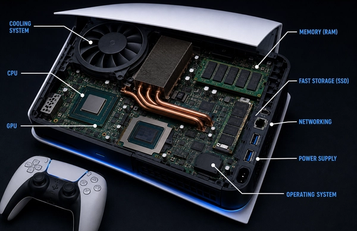
Modern games usually rely on game engines that provide tools for rendering graphics, simulating physics and managing other common tasks. Engines save developers from building every technical system from nothing, but creating a complicated game still requires enormous amounts of custom work.
Artists build the world players actually see
Once the game’s direction becomes clearer, artists transform ideas into environments, characters, objects and visual effects.
Concept artists may first explore what a location or character should look like. Three-dimensional artists then create models, while texture artists add surface details. Animators determine how characters walk, fight and react. Lighting artists help establish atmosphere and guide attention through environments.
Creating a single major character can involve a surprising number of specialists.
The character needs a model, clothing, textures, facial details, animation and potentially hundreds or thousands of lines of performance data. If the game includes cinematic scenes, actors may contribute voice recordings and motion capture.
All of these pieces need to remain consistent with the broader visual direction of the game.
The player sees one character.
Behind that character may be months of work from dozens of people.
Writers cannot simply write the story and leave
Writing for games is different from writing a film or novel because the audience can interact with the experience.
A writer may create characters, dialogue and storylines, but those elements have to fit around gameplay. A dramatic conversation may need different versions depending on decisions the player made several hours earlier.
Games with branching narratives make this even more complicated. One choice can affect later conversations, missions or endings, creating multiple versions of the story that all need to make sense.
Even relatively linear games require close collaboration between writers and other departments. A beautiful scene on paper might require an environment that does not exist yet, animations that are too expensive to create or gameplay changes that disrupt the pacing.
The story therefore evolves alongside the game rather than existing completely separately from it.
Huge amounts of work get deleted
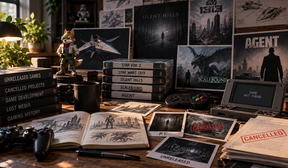
One of the least visible parts of game development is how much finished work never reaches players.
Levels are removed. Characters disappear. Mechanics are abandoned. Entire storylines can be rewritten.
This does not necessarily mean the work was wasted.
Sometimes a feature is technically impressive but makes the game less enjoyable. A level may slow the pacing. A mechanic might conflict with another system. A project may simply become too large to finish within the available time and budget.
Cutting content can actually improve the final game.
The difficult part is that developers may have spent months creating something before discovering that it does not belong.
Finished games therefore represent not only what developers chose to build but also what they eventually decided to leave out.
Testing happens throughout development
Games contain an enormous number of interacting systems, which means they can break in equally enormous numbers of ways.
Quality assurance testers search for problems such as crashes, broken missions, visual glitches and situations where players can become trapped. They document what happened and provide enough information for developers to reproduce the issue.
Fixing one bug can sometimes create another.
Imagine changing how a character interacts with doors to solve a problem in one level. That change could unexpectedly affect hundreds of other doors throughout the game.
Testing therefore continues repeatedly as the project changes.
Developers also conduct playtests to understand whether the game is enjoyable and understandable. A puzzle that seems obvious to its designer may confuse almost every new player. An enemy intended to feel challenging may simply feel unfair.
Watching real people play can reveal problems the development team has become too familiar with to notice.
The final months can become intense
As release approaches, hundreds of unfinished pieces need to come together.
Performance has to be optimized. Major bugs need to be fixed. Localization must be completed for different languages. Online systems need testing. Console versions may need certification, while marketing teams prepare trailers, previews and launch campaigns.
Historically, some studios have relied on periods of intense overtime known as crunch to meet deadlines. The practice has become increasingly controversial because prolonged excessive working hours can seriously affect developers and their personal lives.
Game development is difficult to schedule precisely because creative and technical problems are unpredictable. A feature expected to take two weeks might take two months, while something considered extremely difficult may work immediately.
That uncertainty is one reason games are sometimes delayed.
Release day is rarely the end anymore
Modern game development often continues long after a game launches.
Developers monitor crashes and player feedback, release patches and fix problems that only become obvious once millions of people start playing in ways testers never anticipated.
Some games then receive expansions, new characters, seasonal content or years of updates.
Online games can effectively remain in development for their entire lives.
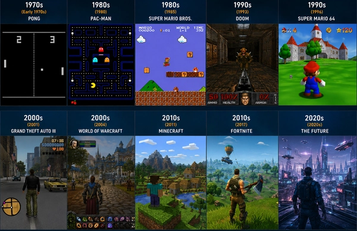
This has changed the idea of what a “finished” game means. In earlier generations, the version on a cartridge or disc was largely the version players would always have. Today, a game can look significantly different several years after release.
Launching the game can be less like crossing the finish line and more like opening the doors.
Every finished game is a collection of compromises
Players often imagine game development as developers slowly assembling exactly the game they originally planned.
In reality, the final product is usually shaped by creativity, technology, money, time and thousands of compromises between them.
Developers constantly ask what is possible, what is affordable and, most importantly, what actually makes the game better.
That is why making games is such an unusual combination of art and engineering. A beautiful idea still has to run on real hardware. A clever piece of technology still needs to create an enjoyable experience.
When you finally press Start, you see none of that uncertainty.
You see the world, characters and systems that survived years of prototypes, revisions, bugs, arguments, playtests and deleted ideas.
The finished game looks inevitable.
Getting there almost never was.